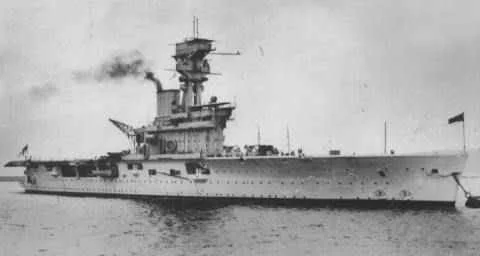
Two contemporary reports survive in the National Archives. The first is Captain Moore’s account of the attack on his tanker, RFA Athelstane, taken from PRO ADM199/2140 (pp. 177–178). The second is the official report of Hollyhock’s sinking by Sub-Lt. G.B. Humby R.N.V.R., from PRO ADM199/623. Read together, they give one of the clearest pictures we have of what happened that midday in the Indian Ocean.
Captain Moore — RFA Athelstane
“We were bound from Trincomalee to Colombo with a cargo of 7,000 tons of admiralty fuel oil. The ship was armed with a 4-inch gun, 2 rifles & 2 P.A.C. rockets. The crew, including 1 Australian Naval Gunner, numbered 52 of whom 3 men were injured. All confidential books, including wireless, were thrown overboard in a weighted bag. The vessel was degaussed and the apparatus was switched on.”
“We left Trincomalee on the 9th April at 0100, sailing independently escorted by HMS Hollyhock, bound for Colombo. At 0900 we saw HMS Hermes, HMS Vampire and the S.S. British Sergeant some distance away from us, all three ships being attacked by aircraft and eventually sunk.”
“Shortly afterwards at 1100 about 29 planes flew over at considerable height, apparently monoplane aero-fighters, returning from this attack. As they did not attack us and soon disappeared, I called up Hollyhock to ascertain their identity, and she replied they were presumably Japanese, as they had ignored their signals.”
“We proceeded at 9 knots steering a southerly course, weather was fine with good visibility, smooth sea with light airs. The sun was directly overhead when at 1207, on the 9th April, in position 7° 31′N, 82° E, we sighted a large number of planes approaching from the south, that is from directly ahead.”
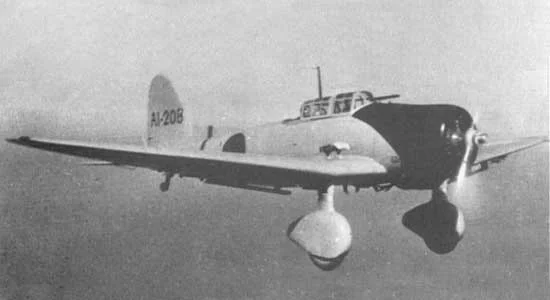
“They were zero fighters about 29 of them as far as I could count, then I noticed 9 planes in a V formation making straight toward us, flying at a height of about 10,000 ft (in reality they were D3A-1 ‘Val’ dive bombers, 20 in number). I ordered the crew to take cover behind the sandbags as we had no A.A. armament, and as I did so the planes formed into single line astern and dived one after the other in rotation in a fore and aft line over the ship. Each plane carried one bomb, which was released at a height of 800 feet, the aircraft pulling out of its dive at about 400 feet.”
“A large number of bombs fell around us, we received 5 direct hits and 2 near misses. The first bomb struck the fore deck between Nos. 1 and 2 tanks… the fourth fell into No. 3 tank, exploded in the oil, which was thrown up, smothering everything, and blew a hole in the starboard side shell plating…”
“The whole attack lasted about 5 minutes, during which another formation of enemy aircraft was attacking HMS Hollyhock. The first bomb fell close alongside her, the second struck her near the funnel, probably exploding in her magazine, as she immediately blew up, disintegrating, and sank at 1217.”
“When the planes flew off I gave the order to lower the boats and abandon ship… The mate jumped overboard for some unknown reason, and was picked up later along with gunner A. Goodman, who had been caught by the blast of the last bomb and was either blown overboard or had jumped over… A native in No. 4 boat, seeing the gunner in the water, jumped into the sea and swam some considerable distance to him, with a rope, and they were both pulled back into the boat. The native’s name is Joseph John, a Christian Hindu.”
“Meanwhile, we pulled our lifeboat for about ¼ mile to the survivors from the Hollyhock and picked up 14 men (2 officers and 12 ratings): the remainder of the corvette’s crew must have been either killed or drowned, as we did not see any other men in the vicinity.” — Captain Henry Moore, RFA Athelstane
“We rowed and sailed the boats for a distance of about 8 miles towards the land, and landed on the east coast of Ceylon a little to the southward of a village called Kalamani. The Athelstane finally sank at 1430, nearly 2½ hours after being hit. All the crew behaved remarkably well throughout the attack and there was no sign of panic amongst the native portion of the crew.”
Sub-Lt. G.B. Humby R.N.V.R. — Report on the Sinking
1. On the morning of the 9th April, H.M.S. “HOLLYHOCK” was proceeding from Trincomalee to Colombo acting as A/S Escort to R.F.A. “ATHELSTANE”. Course 167°. Speed of convoy 9 knots. Clear sky, light N.Easterly breeze, very slight swell. Zigzag ahead of “ATHELSTANE”, one mile ahead.
The attack, minute by minute
Signal received: HMS Hermes sighted by enemy aircraft
At this time Hollyhock was 7 miles, 120° from Hermes. Ship’s company closed up at A.A. stations. Course altered to 200° to close shore.
25 unknown aircraft sighted to eastward, flying north
HMS Hermes attacked
Course altered to 175°
18 enemy aircraft fly overhead steering 170°
Position by cross-bearings 07° 21′ N, 81° 57′ E
9 aircraft sighted bearing 180°, flying North
Ship opened fire with 4″ L.A. and Mk VIII 2-Pdr
R.F.A. Athelstane dive-bombed by 5 aircraft
One bomb each. Ship was hit several times and disabled. Crew abandoned ship.
Attack commenced on HMS Hollyhock
First bomb exploded on starboard side, 25 ft from ship, abreast of galley. Side fuel tanks burst and No. 2 Boiler put out of action due to strained plating.
Second bomb — 30–40 yds off starboard side
Between bridge and 2-pdr. Started to close Athelstane for survivors.
Third bomb on engine room casing
Disabled pom-pom, engines, W/T and steering gear. Ship started to settle fast by the stern.
Fourth bomb burst amidships
Large explosion due to boilers or 2-pdr magazine, or both, exploding. Whole of after part of ship disintegrated and ship sank within 30–40 seconds.
Method of attack
Dive bombing from approximately 3,000 ft. Bombs released at about 300–400 ft. Single engine A/C, type unknown. Undercarriage lowered during dive to act as brake. One bomb only carried. Machine guns not used. First two aircraft came in from ahead; 3rd and 4th from port beam. Bombs were about 250 lbs, armour piercing.
Avoiding action
In the 1st and 2nd attacks, avoiding action using full speed turning hard a-port as aircraft started dive — successful. In 3rd attack, from port beam, maximum available speed was about 11 knots; ship turned towards aircraft just after dive commenced. No action could be taken in the 4th attack as ship was helpless.
Gunfire & armament
Fire was maintained from the 4″ gun up until the very last moment. The pom-pom jammed for two or three minutes between the 2nd and 3rd attacks but was firing almost continuously otherwise, until put out of action.
Ship was not fully equipped with close-range A.A. weapons, there being only one Hotchkiss .303 fired from the shoulder by the First Lieutenant. Single Oerlikons should have been fitted during the last boiler cleaning period in Colombo, but in fact only pedestals were placed on board, and these were not mounted in spite of signals from the ship requesting work be completed before sailing. The two twin Lewis .303 the Oerlikons were to replace had already been transferred to HMS Aster to make way for the new guns.
Coolness under fire
“I should like to invite your attention to the great coolness of the layer of the 4″ gun, A.B. G.B. Fawcett, who remained at his gun long enough to get off one round almost instantaneously with the last explosion. It was noted that the Coxswain C.P.O. Preston remained at his post despite splinters flying all around him and the wheelhouse collapsing. The conduct of the crew as a whole was excellent and the men were at their post right up to the last moment.” — G.B. Humby, Sub-Lt. R.N.V.R.
An additional note: the removed A.A. guns
A separate piece of evidence has since come to light, taken from the obituary of Captain Eric Hewitt RD, RNR, captain of HMS Aster and last commander of the cadet training ship HMS Conway:
“While in Colombo Captain Eric Hewitt RD, RNR was sent to sea on an operation. The corvette HOLLYHOCK was to remain in port so Hewitt had some of her AA armament transferred to the ASTER. In the middle of one night on the patrol the lookout reported a ship ahead. She was challenged. It was the cruiser CORNWALL in company with her sister ship DORSETSHIRE.”
From the Eastern Fleet War Diary: “A report on the loss of these ships was forwarded to the Commander in Chief, Eastern Fleet, in my letter of 22nd April, No. E.I. 3181. The circumstances under which the HOLLYHOCK was at sea without her full H.A. armament have been reported separately.”
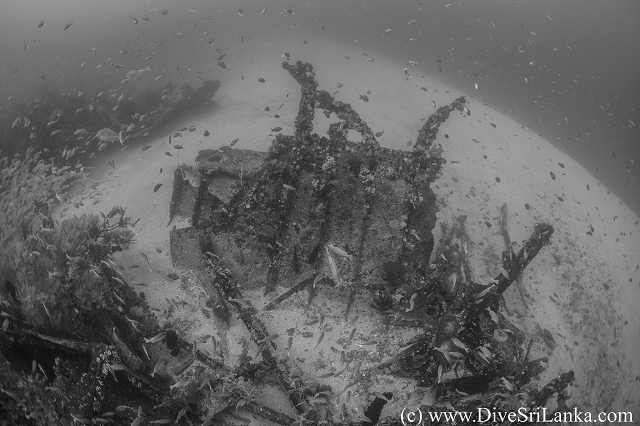
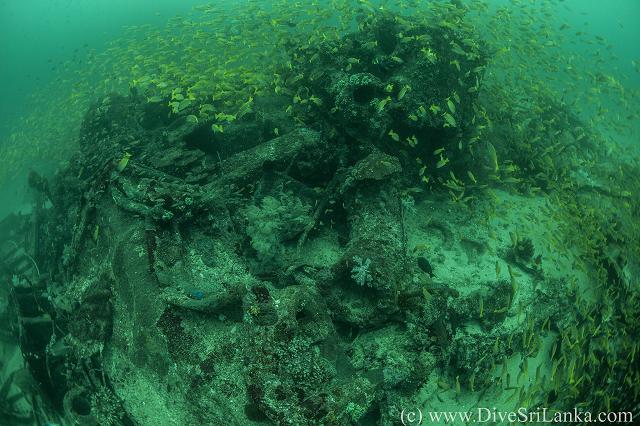
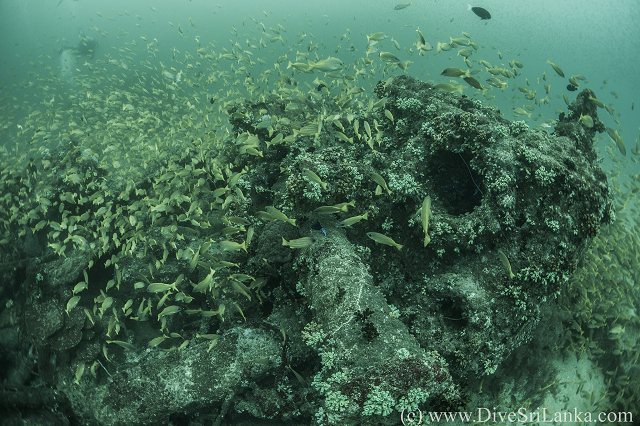
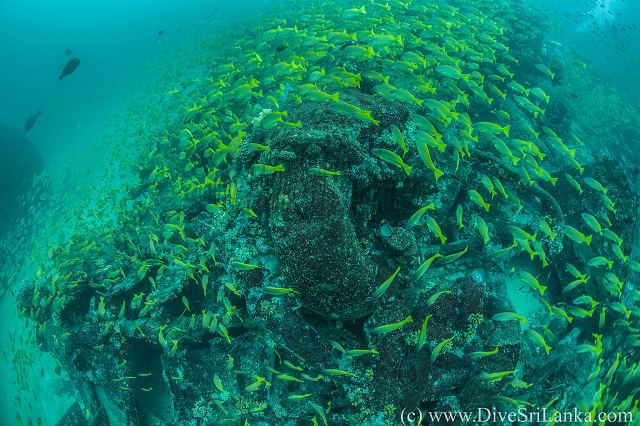
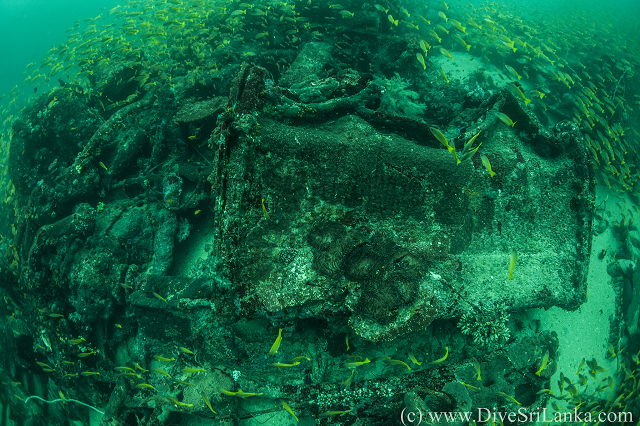
The wreck today
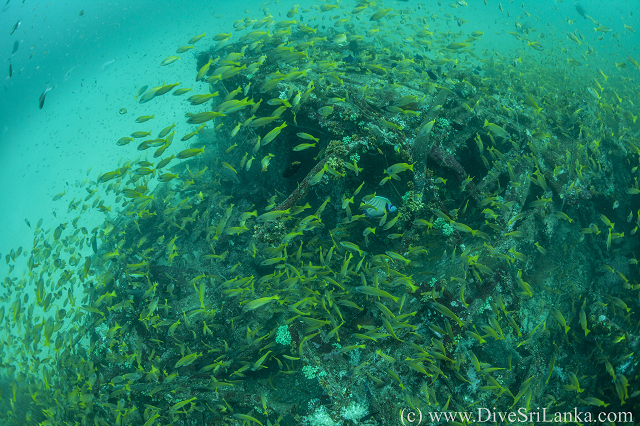
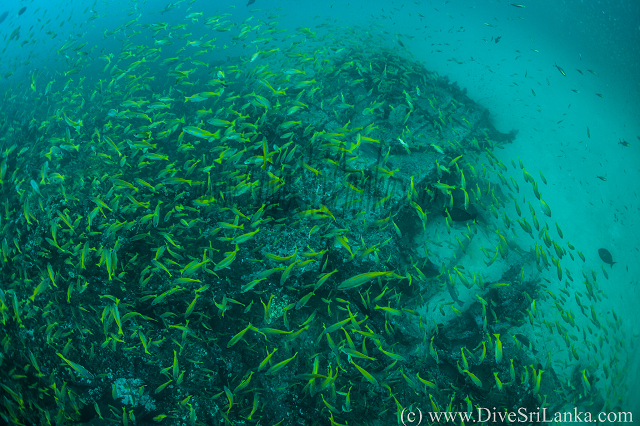
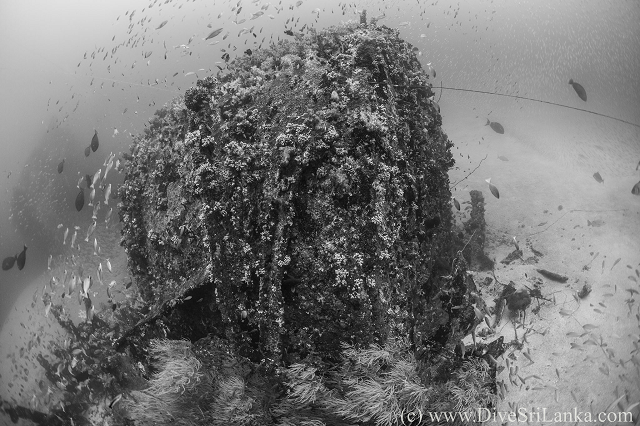
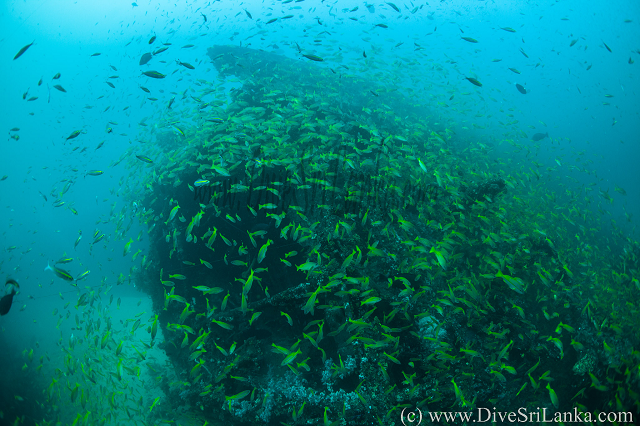
Wreck images by kind permission of divesrilanka.com and Dharshana Jayawardena.